


Description
Yam is the edible tuber of a plant belonging to the genus Dioscorea. It is a staple food in many parts of the world, especially in Africa, Asia, the Caribbean, and Oceania. Here’s a more detailed description:
Botanical Overview:
-
Genus: Dioscorea
-
Family: Dioscoreaceae
-
Type: Perennial vine with underground tubers
Physical Characteristics:
-
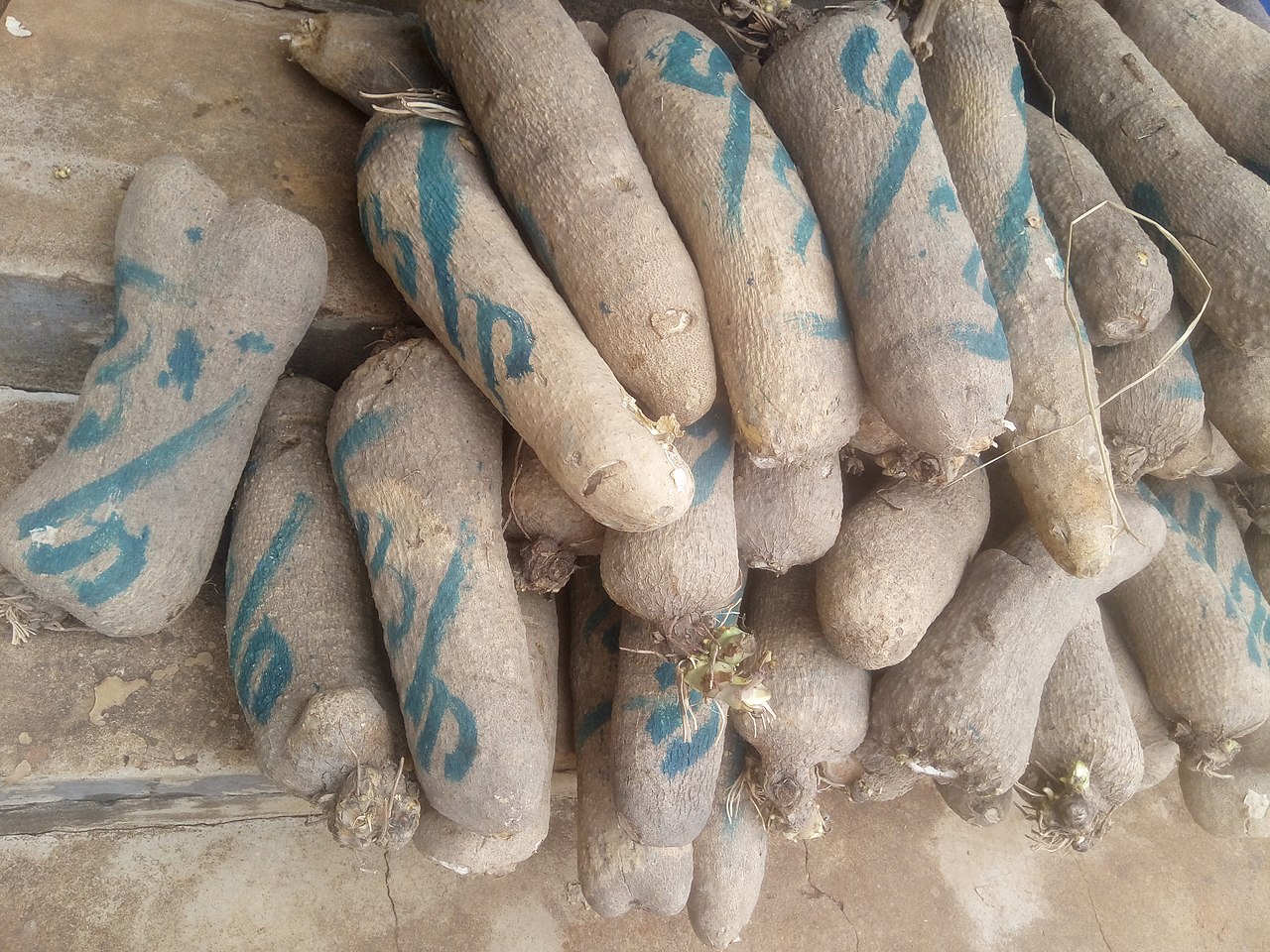
Appearance: Yams have rough, scaly brown to dark bark-like skin and starchy white, purple, or yellow flesh depending on the variety.
-
Size: They can grow very large—sometimes over a meter long and several kilograms in weight.
Nutritional Content:
-
Rich in: Carbohydrates (mainly starch), dietary fiber, and important micronutrients like potassium, vitamin C, and vitamin B6.
-
Low in: Fat and protein
Culinary Uses:
-
Boiled, roasted, fried, or pounded (e.g., into pounded yam in West African cuisine)
-
Used in soups, stews, and as a side dish
Differences from Sweet Potato:
-
Although often confused with sweet potatoes, true yams are botanically different. Yams are usually drier and starchier than sweet potatoes.
Cultural Importance:
-
In West Africa, yams are so significant they have festivals (like the New Yam Festival in Nigeria) celebrating their harvest.