


Description
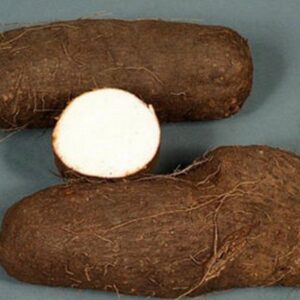
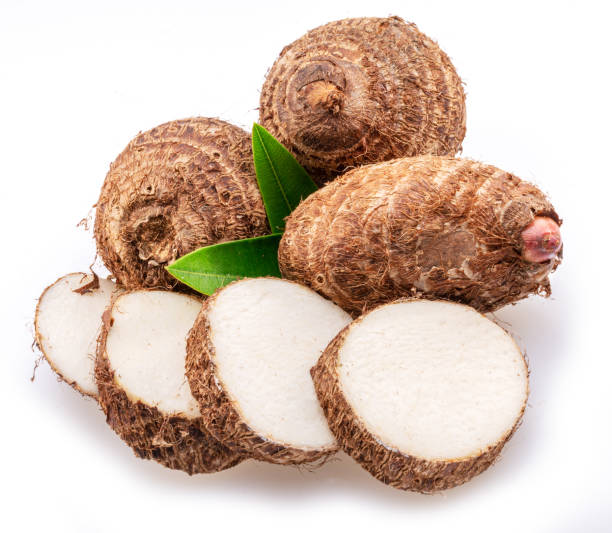
Cocoyam refers to several tropical root crops that are grown primarily for their edible corms (underground stems) and leaves. It is an important food crop in many parts of Africa, Asia, and the Pacific Islands. The term “cocoyam” usually refers to two species:
-
Taro (Colocasia esculenta)
-
Tannia or Malanga (Xanthosoma sagittifolium)
Key Characteristics:
1. Corms and Cormels
-
Cocoyam produces starchy underground parts called corms (main) and cormels (smaller offshoots).
-
These are boiled, pounded, fried, or roasted and serve as a staple carbohydrate.
2. Leaves
-
The leaves are large, heart-shaped, and edible when cooked. They are rich in vitamins A and C, and iron.
-
Popular in dishes like Ghanaian kontomire stew or Nigerian ofe nsala.
3. Growth and Cultivation
-
Grows well in moist, tropical environments.
-
Typically planted using pieces of the corm or suckers.
-
Harvested 6–12 months after planting.
4. Nutritional Value
-
High in carbohydrates, especially starch.
-
Contains dietary fiber, potassium, and some protein.
-
Raw cocoyam contains calcium oxalate crystals, which can cause irritation if not properly cooked.
5. Uses
-
Consumed as boiled or pounded food (like fufu in West Africa).
-
Used in soups and stews.
-
Leaves are used in vegetable dishes.
6. Other Names
-
Taro (in many parts of Asia)
-
Eddoe (a variety of taro)
-
Dasheen (Caribbean)
-
Malanga (Latin America)
-
Cocoyam is called ede in Yoruba, ede or ede ofe in Igbo, and nkontomire (leaves) in Akan.
Summary
Cocoyam is a versatile root crop valued for its starchy corms and nutritious leaves. It plays a vital role in food security and cuisine in many tropical countries. Proper cooking is essential to neutralize its naturally occurring irritants.