


Description
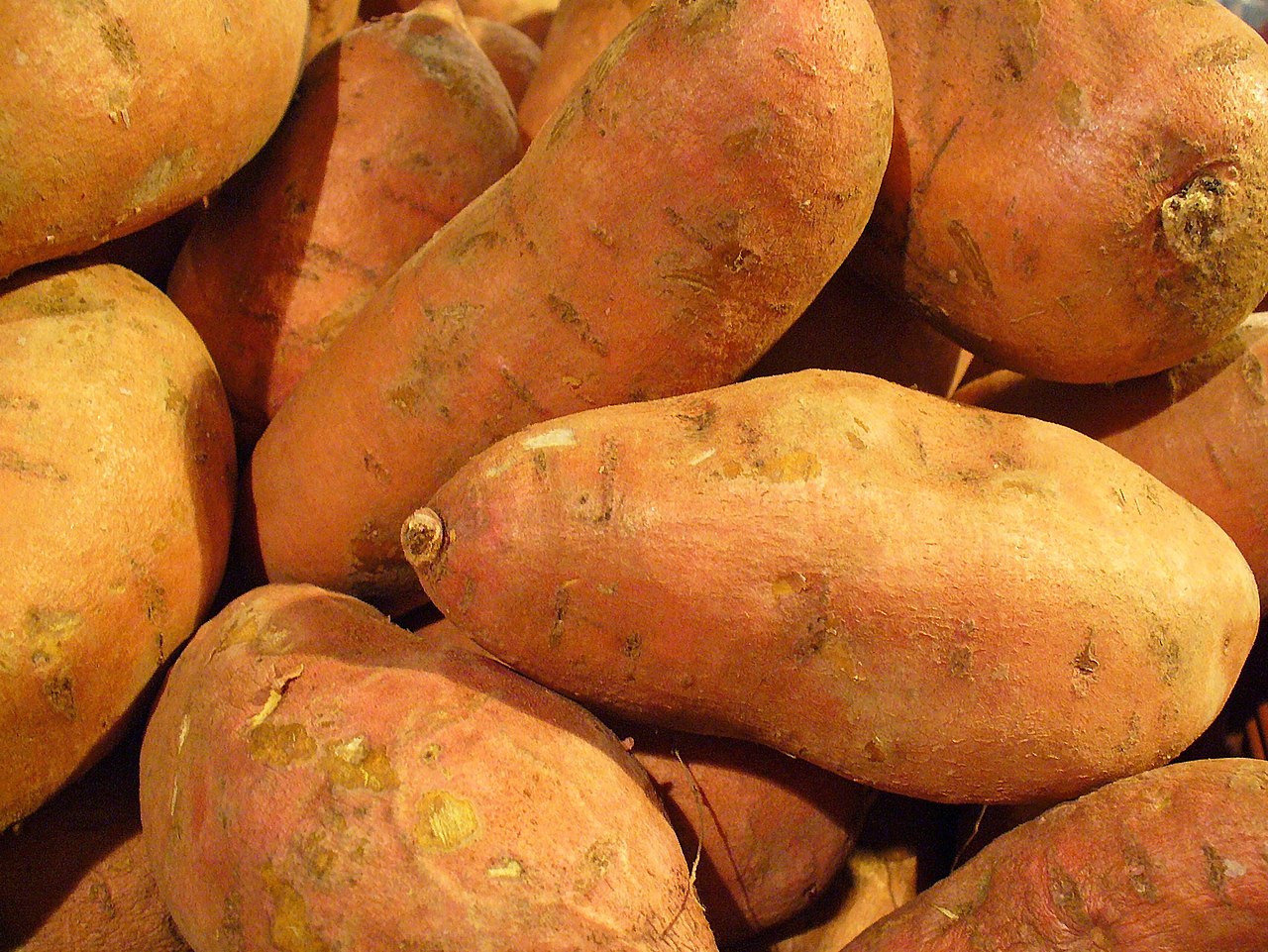
The sweet potato (Ipomoea batatas) is a starchy, sweet-tasting root vegetable that belongs to the morning glory family (Convolvulaceae). It is native to Central and South America but is now cultivated widely around the world in tropical and subtropical regions.
Key Characteristics:
-
Appearance: The tuber has smooth to rough skin that ranges in color from beige, brown, and orange to purple or red. The flesh inside can be white, yellow, orange, or purple, depending on the variety.
-
Taste and Texture: As the name suggests, sweet potatoes have a naturally sweet flavor that intensifies when cooked. The texture can range from soft and moist to firm and dry, also depending on the variety.
-
Nutritional Value:
-
High in beta-carotene (especially orange varieties), a precursor to vitamin A.
-
Rich in fiber, vitamin C, potassium, and antioxidants.
-
Lower on the glycemic index than regular potatoes, making them better for blood sugar control.
-
Culinary Uses:
Sweet potatoes can be:
-
Boiled, baked, roasted, mashed, or fried.
-
Used in both sweet dishes (like pies or desserts) and savory dishes (like stews, soups, and casseroles).
-
Made into products like sweet potato fries, chips, or noodles.
Cultural and Regional Variations:
-
In the U.S., sweet potatoes are often confused with yams, though true yams are a different species native to Africa and Asia.
-
In many Asian cuisines, sweet potatoes are used in desserts, teas, or even grilled as street food.
Sweet potatoes are celebrated not only for their versatility and flavor but also for their impressive nutritional profile, making them a staple in healthy diets worldwide.