


Description
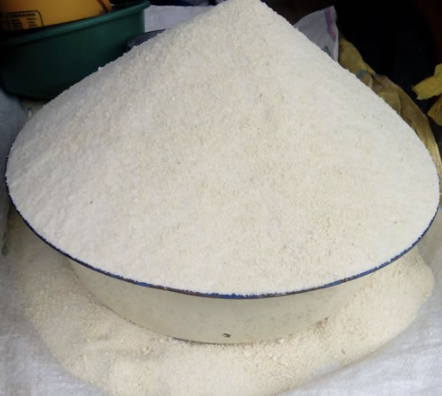
Garri is a popular West African food made from cassava tubers. It is a granulated, starchy flour with a slightly sour taste, often enjoyed as a staple carbohydrate source in many households, especially in Nigeria, Ghana, and other parts of West Africa.
How It’s Made:
-
Peeling and Washing – Fresh cassava roots are peeled and thoroughly washed.
-
Grating – The cassava is grated into a pulp.
-
Fermentation – The pulp is packed into bags and left to ferment for 2–5 days, which gives garri its slightly sour flavor.
-
Pressing – The fermented mash is pressed to remove excess liquid and reduce cyanide content.
-
Sieving and Roasting – The mash is sieved and then fried in a large pan without oil to produce dry, coarse granules.
Types:
-
White Garri – Made without adding palm oil during processing.
-
Yellow Garri – Made with palm oil, giving it a golden color and slightly richer taste.
How It’s Eaten:
-
Drinking Garri: Mixed with cold water, sugar, and optionally groundnuts (peanuts), milk, or coconut for a quick, refreshing snack.
-
Swallow (Eba): Reconstituted with hot water to form a dough-like consistency, served with soups like egusi, okra, or ogbono.
Nutritional Value:
Garri is high in carbohydrates and provides energy, though it has low protein and fiber content. It’s best enjoyed as part of a balanced diet.